Leaving the Forces can mean losing a familiar rhythm: clear standards, a trusted team, defined responsibilities and the satisfaction of getting the job done properly. Plumbing business training can provide a practical route forward, but only if it prepares you for more than fitting pipework. To build a stable local business, you need the technical competence, qualifications, commercial discipline and support structure to earn customers’ trust from day one.
For service leavers, that does not mean starting from scratch in every sense. The habits built through military service – reliability, leadership, communication, planning and accountability – are already valuable commercial assets. The task is to apply them to a trade where households and local businesses need capable people they can depend on.
What plumbing business training should deliver
A training course that only teaches the technical side may help you take an initial step into the industry. It will not necessarily show you how to price work, manage bookings, deal with an unhappy customer or create a consistent flow of enquiries. Those are the areas where many capable tradespeople struggle when they set up alone.
Effective plumbing business training should therefore have two clear objectives. First, it must build safe, practical capability in heating and plumbing. Second, it must prepare you to run an organised business that can support you and your family over the long term.
The balance matters. A brilliant engineer without a system for quoting, scheduling and following up leads can lose work to a less experienced competitor who is simply easier to deal with. Equally, polished marketing cannot compensate for poor workmanship or weak compliance. A sustainable business needs both.
Technical confidence comes before independence
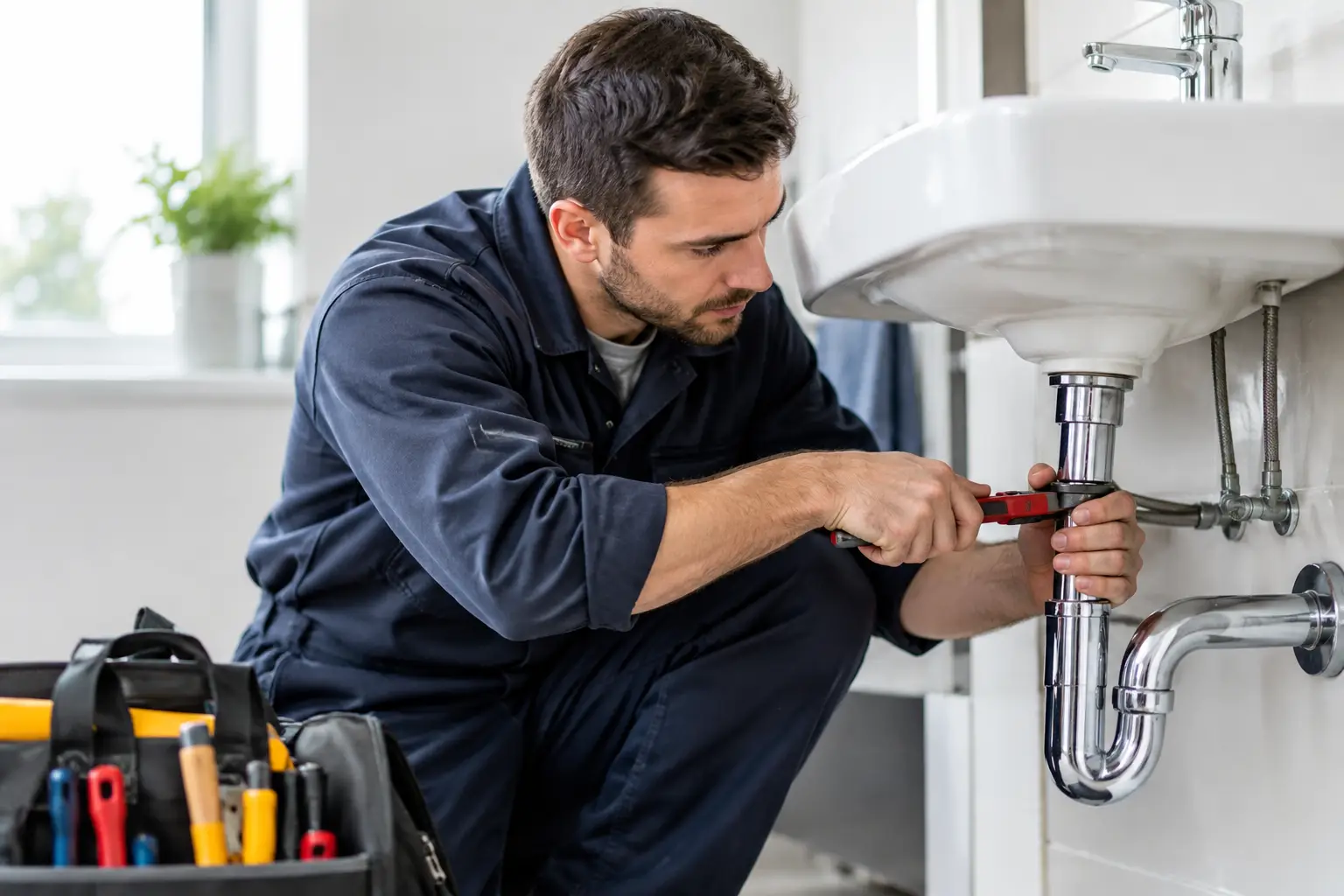
Domestic heating and plumbing work carries real responsibility. Customers are inviting you into their homes, often when they have no heating, no hot water or a leak that cannot wait. They expect a professional who arrives when promised, explains the problem plainly and leaves the property safe and tidy.
Training should give beginners a structured route through core practical skills, fault finding, installation standards and customer-facing work. Where gas work is part of the intended service offering, it should also include the relevant pathway towards recognised qualifications, Gas Safe registration and the compliance knowledge required for that work.
There is no shortcut worth taking. Qualifications and registration requirements depend on the services you plan to provide, your training route and the work you are undertaking. A credible programme is clear about those requirements, gives you supervised practical development and helps you understand the limits of what you can do at each stage.
The business skills that protect your income
A plumbing business is not built on tools alone. It is built through repeatable decisions made well under pressure: answering the phone professionally, setting expectations, recording job details, ordering materials, sending accurate quotes and collecting payment promptly.
This is where military experience can translate strongly. Service personnel are used to preparation, process and maintaining standards when circumstances change. In civilian business, those same behaviours help prevent missed appointments, unclear quotes and costly mistakes.
A complete programme should cover the operating basics that often feel unfamiliar to new business owners:
- setting up the business correctly, with realistic financial forecasting and an understanding of day-to-day costs;
- pricing labour and materials so that turnover becomes genuine income rather than constant firefighting;
- using booking, quoting and customer-management software to keep every job visible and controlled;
- building local marketing and lead-generation activity that creates a reliable pipeline of work;
- delivering customer service that earns reviews, recommendations and repeat business.
None of this removes the responsibility of owning a business. You will still make decisions, manage your diary and carry your name on every job. What good training does is replace guesswork with a proven operating framework.
Why a structured route suits military leavers
The jump from Service life to self-employment can feel larger than it looks. You may be confident leading people, working to demanding deadlines and solving problems in difficult environments, yet still be unsure how to turn those strengths into a civilian income. That uncertainty is normal.
A structured route provides progression rather than vague promises. You know what you are learning, why it matters and what comes next. You can develop practical competence, gain the appropriate industry grounding and learn the commercial systems needed to operate professionally.
It also preserves something many service leavers miss: being part of a team with shared standards. Business ownership can be independent without being isolated. The right network gives you access to experienced people, practical advice and mentoring when a job, customer issue or business decision needs a second view.
That support is particularly valuable in the first year. Early trading brings questions that no classroom can fully recreate. How should you respond to a late cancellation? When is a quote too low? Which jobs fit your capability now, and which should wait until you have more experience or additional qualifications? A mentor helps you make sound calls while retaining ownership of the decision.
Training for the real customer experience
Customers rarely judge a heating and plumbing business on technical skill alone, because they cannot always see it. They judge what they experience: whether you answer the phone, turn up on time, protect their home, explain the work and leave clear paperwork.
That is good news for veterans. Professional bearing, punctuality and straight communication are not marketing slogans. They are visible behaviours that create confidence before the first tool is lifted.
Customer-service training should make those standards deliberate. A clear booking confirmation, an honest arrival window and a concise explanation of options can set a business apart in a crowded local market. So can the discipline to say when a job is outside your current scope. Integrity protects customers, your reputation and your future earning potential.
Franchise support versus starting alone
Starting an independent plumbing business from scratch offers complete freedom, but it also places every task on your shoulders. You must choose suppliers, create a brand, learn lead generation, establish processes and find help when a problem arises. For some experienced engineers, that route may be right.
For a service leaver entering the trade, a franchise model can reduce part of that initial operational risk. You still own and run your local business, but you work within an established brand and system. Training, marketing support, booking software, business guidance and ongoing mentoring are designed to give you a stronger starting position.
The trade-off is equally clear: a franchise involves fees, standards and an agreed way of operating. It is not a passive investment, nor is it a guarantee of income. Your results still depend on your commitment, local demand, customer service and willingness to follow the process. For many former Armed Forces personnel, however, clear standards and accountable support are strengths rather than restrictions.
Regimental Heating was built around that principle: helping veterans, serving personnel leaving the Forces and reservists turn Service values into independently owned heating and plumbing businesses, while remaining part of a professional network with a wider veteran-welfare mission.
Questions to ask before committing
Before choosing a training provider or business route, ask direct questions. What qualifications and practical experience will I gain? What is included in the cost, and what additional investment will I need? How will I be supported after training ends? What systems are provided for bookings, quoting and lead generation? Can I speak to people who have followed the same route?
Also ask what success looks like in realistic terms. Be wary of easy-income claims. A credible provider will discuss the work involved, the time needed to build a customer base and the importance of maintaining quality as you grow. Honest expectations are a stronger foundation than a sales pitch.
Your next chapter does not need to abandon the standards that shaped your Service. With the right technical development, commercial training and support around you, those standards can become the reason local customers choose you, recommend you and call you again when the job matters.